
How to Play Sudoku: A Step-by-Step Guide for Beginners
Sudoku looks intimidating at first, but it’s actually a simple logic puzzle once you know the rules. You don’t need math — just elimination and a calm, systematic approach.
This guide explains exactly how to play Sudoku: the 3 core rules, a beginner-friendly solving flow, what to do when you get stuck, and the most common mistakes to avoid.
If you’ve ever stared at a grid thinking “I have no idea what to do next,” you’re not alone. Sudoku has a repeatable rhythm: scan, place a forced number, and scan again. Use this page as a checklist while you play.
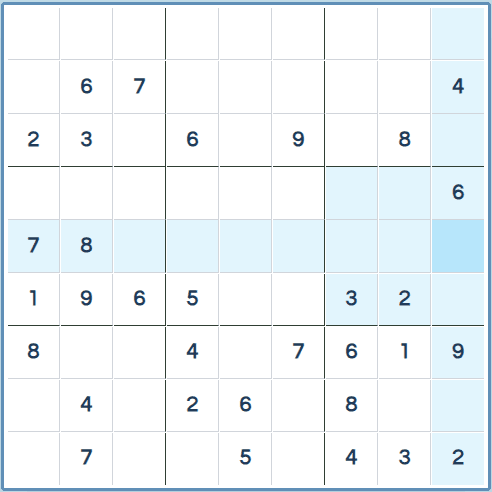
Sudoku in 30 Seconds
Goal: fill the 9×9 grid so every row, every column, and every 3×3 box contains the numbers 1–9 exactly once.
Most puzzles start with a few numbers already placed. Those given numbers are fixed. Your job is to fill the remaining empty cells while respecting the rules at all times.
The 3 Sudoku Rules (The Only Rules You Need)
Everything in Sudoku comes back to these three rules. If you follow them consistently, you’ll avoid 95% of beginner mistakes.
- Row rule: Each row must contain numbers 1–9 with no repeats.
- Column rule: Each column must contain numbers 1–9 with no repeats.
- 3×3 box rule: Each 3×3 box must contain numbers 1–9 with no repeats. This is the most commonly missed rule.
Quick self-check: whenever you place a number, confirm it doesn’t conflict in the same row, the same column, or the same 3×3 box.
Want the visual version? See Sudoku rules →
Before You Start (Fast Beginner Setup)
A small setup routine makes Sudoku feel much easier. These habits keep you progressing without random guessing.
- Start with the most filled row/column/box — it’s easier to spot missing numbers.
- After every placement, quickly re-check row + column + box (all three).
- If you feel stuck, don’t guess. Re-scan the grid and look for a forced move.
- Work in small loops: solve a bit in one area, then move to another box.
- If you use pencil marks, keep them tidy — messy notes slow you down.
How Do You Play Sudoku? (Step-by-Step Method)
This is the simplest beginner method that works on most easy and many medium puzzles. The key is to look for forced moves first.
- Step 1 — Scan for singles Look for a row/column/box where only one number is missing. If only one value fits, place it.
- Step 2 — Use ‘single candidate’ For an empty cell, consider which numbers are blocked by its row/column/box. If only one number remains possible, it must go there.
- Step 3 — Use ‘single position’ Sometimes a number can only appear in one spot within a row/column/box. Place it even if the cell has multiple candidates.
- Step 4 — Repeat the loop Sudoku progress is usually a loop: Scan → place forced number → scan again. This alone solves many beginner puzzles.
- Step 5 — (Optional) Pencil marks For harder puzzles, write small candidate notes. This makes elimination much easier and prevents random guessing.
- Step 6 — Eliminate by focusing on one number Pick a missing number (like 7) and check each 3×3 box: where can 7 go, and where is it blocked? This often reveals a forced placement.
If you follow the loop and keep re-scanning after every placement, you’ll be surprised how often the next move becomes obvious.
Sudoku Tips for Beginners (That Actually Help)
These tips are small, but they stack. Use them consistently and you’ll solve faster with fewer mistakes.
- Look for the “most constrained” area A row/column/box with fewer blanks is easier. Finish easy sections first to open the grid.
- Use the box as your anchor Beginners often forget boxes. When stuck, scan each 3×3 box and list missing numbers.
- Don’t be afraid to switch zones If one corner feels impossible, move to another. Progress elsewhere often unlocks the stuck area.
- Keep candidates clean (if you use them) Remove candidates as soon as they’re eliminated. Clean notes reduce mental load and prevent errors.
- Verify placements immediately A quick row + column + box check after every move prevents long chains of mistakes.
Common Sudoku Mistakes
Most Sudoku ‘difficulty’ for beginners is just a couple of repeat mistakes. Fix these and puzzles feel dramatically easier.
- Ignoring the 3×3 box Many errors happen when players check only rows and columns. Always check the box too.
- Guessing too early If you need to guess, you likely missed a forced move. Re-scan the grid slowly.
- Fixating on one area Switch to another box/region. A puzzle often ‘opens up’ somewhere else first.
- Overusing pencil marks Candidates help, but too many notes can overwhelm you. Use them only when scanning stops giving progress.
What to Do When You’re Stuck
If you hit a wall, it doesn’t mean you’re bad at Sudoku. It usually means you missed a forced move or need a different viewpoint.
- Re-scan each 3×3 box and list the missing numbers.
- Pick one number (e.g., 7) and see where it can/can’t go in a box.
- Look for a row/column that is almost complete.
- If you’re using candidates, eliminate aggressively — contradictions reveal the right move.
- Take a 30-second break, then re-check the box rule with fresh eyes.
Questions People Ask (Quick Answers)
How do I play Sudoku?
Follow the 3 rules (row, column, 3×3 box). Then use scanning + single candidate + single position to place forced numbers without guessing.
How can I play Sudoku as a beginner?
Start with easy puzzles and focus on singles first. Avoid guessing, re-scan the grid, and use pencil marks only when needed.