
Sudoku Strategy: 21 Powerful Techniques & Tips to Solve Faster (No Guessing)
Before any fancy sudoku solving techniques, speed comes from doing the simple things the same way every time. Think of this as the “warm-up” that makes your sudoku strategy work smoothly.
This guide takes you from beginner to advanced—without guessing. You’ll build a solid solving routine, learn genuinely useful Sudoku tips, and understand patterns like X-Wing, Swordfish, XY-Wing, and XYZ-Wing in clear, plain English.
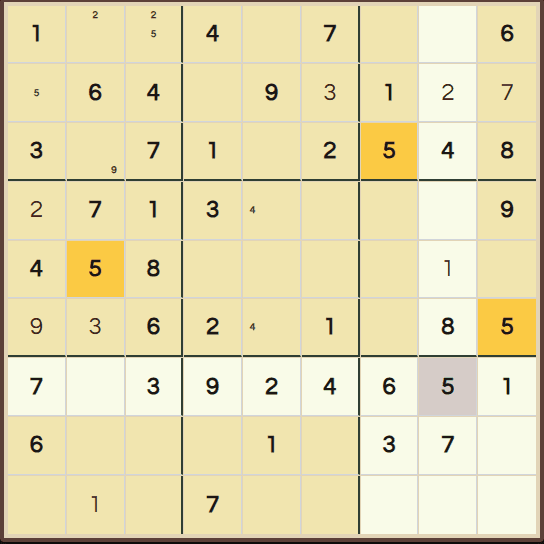
Quick Start: Set Up for Faster Solves
Speed usually isn’t about thinking harder—it’s about removing friction. Set yourself up the same way every time and your solves become smoother and more reliable.
Pick the Right Difficulty for Today
If you’re practicing, don’t always jump into the hardest grid. A smart approach is:
- Easy/Medium: train scanning speed and clean placements
- Hard: train candidates, pairs/triples, and locked candidates
- Expert: train advanced patterns like X-Wing and Swordfish
Use a Clean Notation System
Messy notes are like trying to read a map in the rain. Decide on one of these:
- Mini pencil marks: only write candidates when you’re stuck
- Full pencil marks: fill all candidates early (best for learning intermediate/advanced)
Pick one for a week and stick to it. Consistency builds speed.
What “Sudoku Strategy” Really Means
A lot of people think sudoku strategy means “memorize cool tricks.” Not quite. Strategy is your overall plan, while techniques are your tools.
Strategy vs Techniques vs Habits
- Strategy: the order you attack the puzzle (your routine)
- Techniques: the logic moves you apply (pairs, X-Wing, etc.)
- Habits: your discipline (re-scanning, cleaning notes, checking units)
The 3 Layers: Scanning, Candidates, Patterns
Most solvers climb these layers:
- Scanning layer: find singles and obvious placements
- Candidate layer: use pencil marks and eliminations
- Pattern layer: use structures like X-Wing, Swordfish, XY-Wing/XYZ-Wing
Good news: you don’t need to “jump” layers randomly. You cycle upward only when simpler logic runs out.
Beginner Strategy (No Guessing)
If you want to solve Sudoku step by step without guessing, master one loop: scan, place, repeat. It’s not glamorous—but it works.
Scan → Place → Repeat
Here’s the loop:
- Scan rows for a missing number that fits only one spot
- Scan columns the same way
- Scan 3×3 boxes next
- Place the sure thing
- Repeat immediately (every placement changes the board)
This sounds basic, but it’s the fastest way to avoid errors.
Singles: Naked Singles & Hidden Singles
- Naked single: a cell has only one candidate left (only one number fits).
- Hidden single: a number can go in only one place in a row/column/box—even if that cell still has multiple candidates written.
Beginner pro tip: Hidden singles are the “secret engine” of most easy/medium puzzles. Many players miss them because they stare at cells instead of scanning units (rows/columns/boxes).
Box-Line Scanning (Cross-Hatching)
Cross-hatching means scanning a 3×3 box while using row/column restrictions. If a number already exists in two rows of that box’s band, it must go in the remaining row. Do the same with columns. This is one of the best sudoku tips for fast early progress.
Pencil Marks (Candidates)
Candidates are not just “notes.” They are your logic workspace. If you treat them casually, they’ll become clutter. If you treat them like rules, they’ll point to the next move.
Full vs Mini Pencil Marks
- Full pencil marks: write all possible candidates in all empty cells. Best for learning intermediate/advanced techniques.
- Mini pencil marks: only add candidates to a few tricky spots. Best for speed-solving easier grids.
A smart learning path is: full marks while learning, then gradually shift to mini marks as patterns become automatic.
Candidate Cleanup Rule
- Every time you place a number, remove that number from candidates in the same row, column, and box.
- Then check if you created a single or a pair.
This one habit alone makes your sudoku techniques feel stronger because your board stays readable.
Intermediate Techniques
Intermediate sudoku solving techniques are where puzzles start feeling “logical” instead of “lucky.” These tools don’t require guessing—they require careful candidate reading.
Naked Pairs / Triples
A naked pair is when two cells in a unit (row/column/box) contain the same two candidates, like {2,7} and {2,7}. Those two numbers must be in those two cells (in some order), so you can remove 2 and 7 from every other cell in that unit. A naked triple works the same way with three cells sharing three candidates.
Spotting Checklist
- Look for tiny candidate sets (2 or 3 numbers)
- Check if the same set repeats in the same unit
- Confirm no other cells need those numbers
Common mistake: seeing two cells with {2,7} but forgetting to confirm they’re in the same row/column/box. If they’re not in the same unit, it’s not a naked pair.
Hidden Pairs / Triples
A hidden pair is the opposite idea. In a unit, if two numbers appear as candidates only in two cells (even if those cells have extra candidates), those two numbers must be placed there. You erase the extra candidates and keep the pair. Hidden sets are a big step toward solving harder puzzles without stalling.
Locked Candidates (Pointing/Claiming)
Locked candidates are clean, powerful eliminations that often unlock the whole grid.
Pointing
If within a 3×3 box a candidate appears only in one row (or one column), then that candidate cannot appear elsewhere in that same row (or column) outside the box.
Claiming
If in a row (or column), a candidate appears only in cells that lie inside one 3×3 box, then you can remove that candidate from the rest of the box.
This is one of the best “bridge moves” from beginner logic to advanced patterns.
(Bonus) Simple Coloring (Two-Color Logic)
Simple coloring is a safe way to test a candidate’s consequences without full guessing.
- Pick a number (say 5).
- In a chain of strong links (only-two-spot situations), alternate two colors.
- If two same-colored candidates appear in the same unit, that color is impossible.
You don’t have to master this immediately, but it’s a great tool for stuck moments.
Advanced Techniques (Explained Simply)
Advanced doesn’t mean complicated—it means structured. These patterns look scary until you learn what to look for. Once you do, they become fast.
X-Wing (x wing sudoku)
In X-Wing, you’re hunting a rectangle. If a candidate number (say 8) appears in exactly two cells in row A, and the same two columns also contain candidate 8 in exactly two cells in row B, you get a rectangle. That means the 8 must be placed in those positions—so you can eliminate 8 from other cells in those two columns outside the rectangle.
X-Wing Spotting Checklist
- Start with one number (like 8).
- Scan rows for exactly two candidate spots.
- Match another row with the same two columns.
- Eliminate that candidate from other cells in those columns.
Swordfish (swordfish sudoku)
Swordfish is like X-Wing’s bigger cousin. Instead of 2 rows and 2 columns, it uses 3 rows and 3 columns. If a candidate appears in each of three rows in only 2–3 columns total (and those columns match across the rows), you can remove that candidate from those columns in other rows. Learn X-Wing first, then Swordfish feels natural.
XY-Wing / XYZ-Wing (xy wing, xyz wing)
These are “wing” patterns built on a pivot cell and two wing cells.
XY-Wing (xy wing)
- Pivot has candidates {X, Y}
- Wing 1 has {X, Z}
- Wing 2 has {Y, Z}
If the wings “see” the pivot properly, then Z can be eliminated from certain shared cells. Plain-English idea: no matter what the pivot becomes, Z gets forced into one of the wings—so shared Z spots elsewhere become impossible.
XYZ-Wing (xyz wing)
- Pivot has {X, Y, Z}
- Wings are {X, Z} and {Y, Z}
XYZ-Wing is similar but often creates a stronger elimination in the intersection area.
Tip: Wings are advanced because they require clean candidate notes. If your candidates are messy, these patterns feel invisible.
What to Do When You’re Stuck
Getting stuck is normal—even for strong players. The trick is having a routine that doesn’t turn into random guessing.
Reset Routine (30–60 seconds)
- Re-scan for hidden singles (they appear after eliminations).
- Clean candidates (remove obvious impossibles).
- Check each 3×3 box for locked candidates (pointing/claiming).
- Look for pairs (naked or hidden).
Use “Pressure Tests” on Units
Pick the most constrained unit:
- The row/column/box with the fewest empty cells
- Or the unit where one number has very few candidate spots
How to Avoid Bad Guessing
If you ever must branch (in extreme puzzles), don’t guess blindly. Use a controlled assumption:
- Choose a cell with two candidates.
- Write a small note of what changes if you pick option A.
- If you hit a contradiction, option A is false—so option B is true.
Practice Strategy in Sudoku Together
Learning alone works—but structured practice works faster. Train sudoku strategy like a skill.
Solo Drills That Build Speed
Try this weekly routine:
- Day 1–2: 10 easy puzzles focusing on scan → place → repeat
- Day 3–4: medium puzzles focusing on pencil marks + pairs
- Day 5: locked candidates only (pointing/claiming focus)
- Day 6: one hard puzzle—aim to identify at least one advanced pattern
- Day 7: review mistakes and repeat your weakest day
Multiplayer / Shared Solving
Solving together is powerful because you see how others spot patterns, learn alternate routes (not just one method), and build confidence explaining logic.
Track Your Progress
Track three numbers:
- Solve time
- Mistakes (wrong entries)
- Which technique unlocked the puzzle
When you can say “Locked candidates did it today,” your skills are becoming real.
Common Mistakes That Slow You Down
These are sneaky and common:
- Over-writing candidates until the grid is unreadable
- Not re-scanning after every placement (missing new singles)
- Jumping to advanced patterns too early
- Ignoring boxes and only scanning rows/columns
- Forgetting that eliminations are progress (not only placements)
FAQ
What is the best way to learn sudoku techniques fast?
Start with a stable routine: scan → place → repeat, then add pencil marks, then pairs, then locked candidates. Don’t jump straight to X-Wing.
How do I solve sudoku step by step without guessing?
Use unit scanning (rows/columns/boxes), place singles, maintain candidates, and apply intermediate eliminations like pairs and locked candidates before considering advanced patterns.
What are the most useful sudoku tips for beginners?
Re-scan constantly, keep candidates tidy, and focus on hidden singles. Beginners often miss hidden singles even when they’re everywhere.
When should I use x wing sudoku or swordfish sudoku?
Only after singles, pairs, triples, and locked candidates stop working. These patterns require accurate candidates to spot reliably.
Why do I get stuck even when my candidates look right?
Usually because you’re not looking at the right unit. Use pressure tests on the tightest row/column/box, and check for hidden pairs/triples.
Are XY-Wing and XYZ-Wing worth learning?
Yes—especially for expert puzzles. But they’re easiest when you keep clean candidates and understand how cells “see” each other.
What’s one habit that improves sudoku strategy the most?
After every placement, do a quick re-scan of the affected row/column/box. New singles appear constantly.
Conclusion: Your Next 7 Days of Practice
A strong sudoku strategy isn’t about flashy tricks—it’s about doing the basics cleanly and adding tools in the right order. If you master scanning, candidates, pairs, and locked candidates, you’ll already solve most puzzles smoothly.
Then advanced patterns like X-Wing, Swordfish, XY-Wing, and XYZ-Wing become “nice tools,” not scary walls.